What are zirconium wedding rings
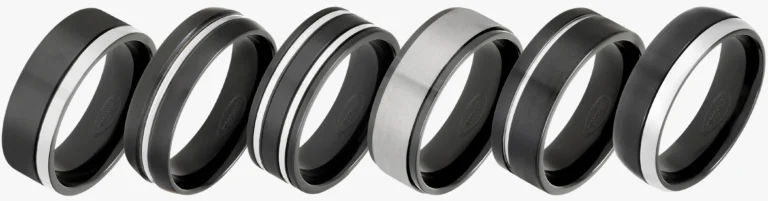
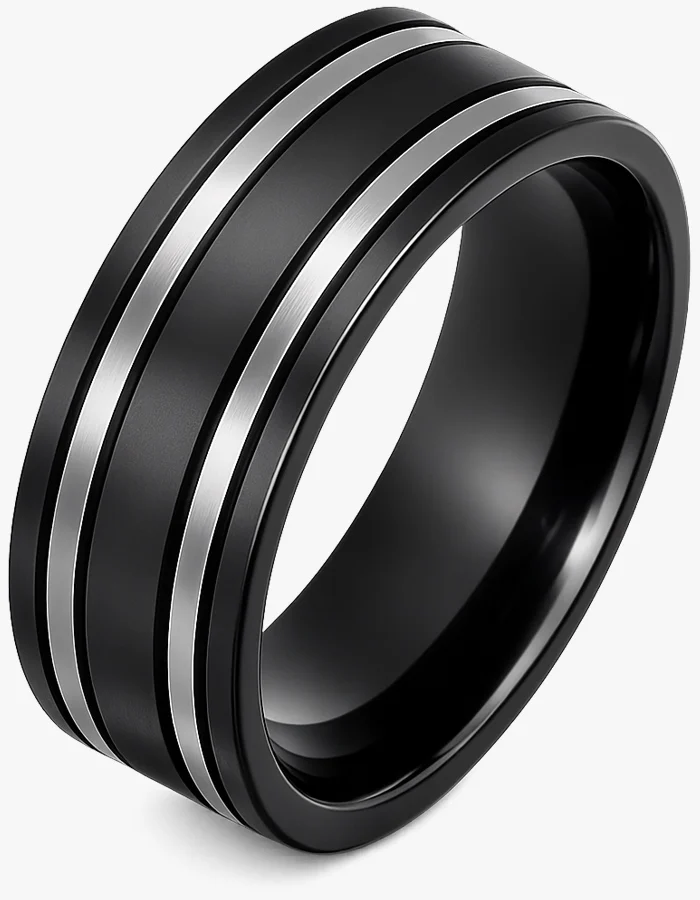
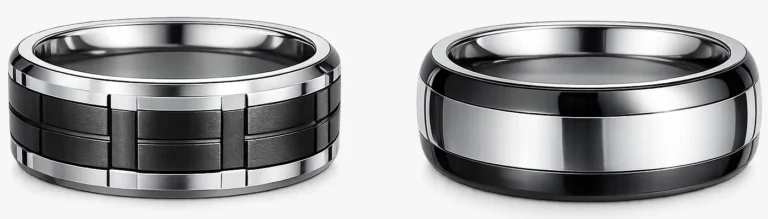
Zirconium wedding rings are not like other black wedding rings. They are metal rings that combine deep black surface areas with natural silver grey metal beneath. That contrast is the defining feature.
Every design in our zirconium range is two tone. The black areas are created through controlled high temperature oxidation of the metal itself. Sections of that oxide are then machined away to reveal the natural grey zirconium below. The result is a permanent contrast between black oxide and natural metal. That visual balance is why people choose zirconium.
With close to four decades as a working goldsmith and nearly 25 years specialising in alternative metals, we have worked with zirconium long enough to understand how the oxide performs over years of real wear. If you are researching zirconium rings, this guide explains how the material behaves, what to expect from daily wear, and how it compares with ceramic, titanium and tungsten.
What is black zirconium?
Zirconium is a transition metal. In its natural state it is silver grey, similar in colour to titanium. When heated under controlled conditions, oxygen diffuses into the surface and forms zirconium oxide. This oxide layer is black.
This is not plating and not PVD. It is a chemical transformation of the surface. The oxide is chemically bonded to the metal beneath and has a surface hardness of around 9 on the Mohs scale. That hardness relates to the black oxide layer, not the underlying grey metal.
All our zirconium wedding rings begin as natural grey zirconium. After oxidation, selected areas are cut back using precision machining to reveal the grey metal beneath. That process creates the two tone detail that defines black zirconium designs.
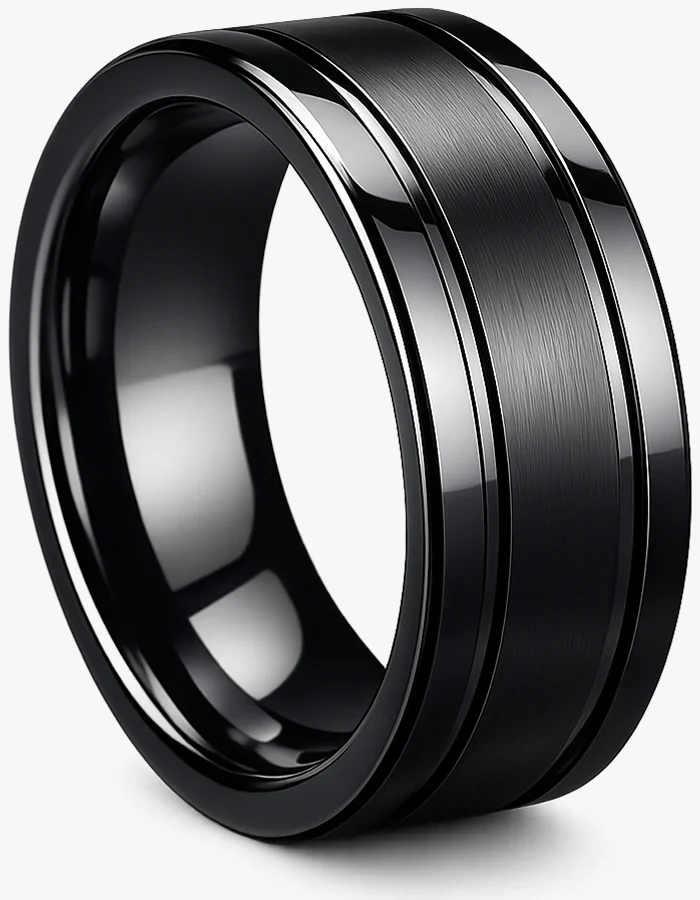
We do not offer plain all black zirconium rings. The material is chosen for contrast between black and grey. If you want a fully black ring with no contrasting metal, our black ceramic rings are the better option, as ceramic is colour through and solid black throughout.
Outside jewellery, zirconium has an interesting industrial background. Around 90 percent of global production is used in the nuclear power industry for fuel rod cladding because of its corrosion resistance and low neutron absorption. It is also used in aerospace, chemical processing equipment, and medical implants. It melts at approximately 1855 degrees C. None of that is directly relevant to wearing a ring, but it does explain why the metal handles moisture, heat and daily contact without issue.
For readers who want more depth on metallurgy and workshop processing, we cover that separately in our zirconium metal technical guide.
Why choose zirconium wedding rings?
The two tone character is what draws most people in. Black zirconium rings combine deep black oxide with natural grey metal in one ring. That makes them popular as contrasting wedding rings and as two tone wedding rings for men who want detail without gemstones.
Toughness matters too. Zirconium is a ductile metal. Under impact it will dent or deform rather than shatter. This is different from ceramic or tungsten carbide, which can fracture under a sharp blow. For many customers asking are zirconium rings durable, this ductility is a key part of the answer.
Comfort plays a part in long term wear. Zirconium is slightly heavier than titanium but much lighter than tungsten or tantalum. On the hand it feels solid without being heavy. Most of our zirconium rings for men are available in 7mm, 8mm and 8.7mm widths, and are shaped with comfort fit interiors for daily wear.
Skin safety is also important. Zirconium is biocompatible and hypoallergenic. It does not corrode, tarnish or react with water or sweat. That makes zirconium wedding rings suitable for people with metal sensitivities.
Engraving is possible on zirconium, which is not the case with ceramic. This matters for many couples choosing black wedding rings who still want personalisation inside the band.
What to expect from daily wear
Black zirconium performs well in normal daily wear. The oxide layer is hard and resistant to scratching. However, it is still a surface layer. Unlike ceramic, which is black throughout, zirconium has grey metal beneath the oxide.
Under very heavy abrasion or deep scratching, the grey metal can become visible. This is uncommon in normal use but possible during heavy manual work or gym training. We advise removing the ring for activities involving high point loads or repeated hard impacts.
A common concern is scratching. When customers ask do zirconium rings scratch, it helps to distinguish between true scratches and metal transfer. When black zirconium contacts softer metals such as keys or door handles, marks can appear that look like scratches. In many cases these are deposits of the softer metal on the hard oxide surface. These marks can usually be removed with a scouring pad, revealing the original black finish beneath. True scratches occur when the oxide layer itself is cut through.
Because zirconium is ductile, it will not crack or shatter. If heavily impacted, it is more likely to dent. That balance between surface hardness and metal toughness is part of its appeal compared with more brittle materials.
In the unlikely event of an emergency, zirconium wedding rings can be cut off using standard ring cutting equipment available in hospitals and emergency departments. It is a metal ring, not a ceramic, so conventional tools are effective.