Rhodium plating at a glance
| Feature | What to expect |
|---|
| Typical lifespan | 6–18 months with daily wear |
| Appearance | Very bright, cool white, mirror-like |
| Cost in the UK | £40–£70 per ring |
| Purpose | Visual finish, not structural |
| Wears first | Underside, edges, contact points |
What is rhodium plating?
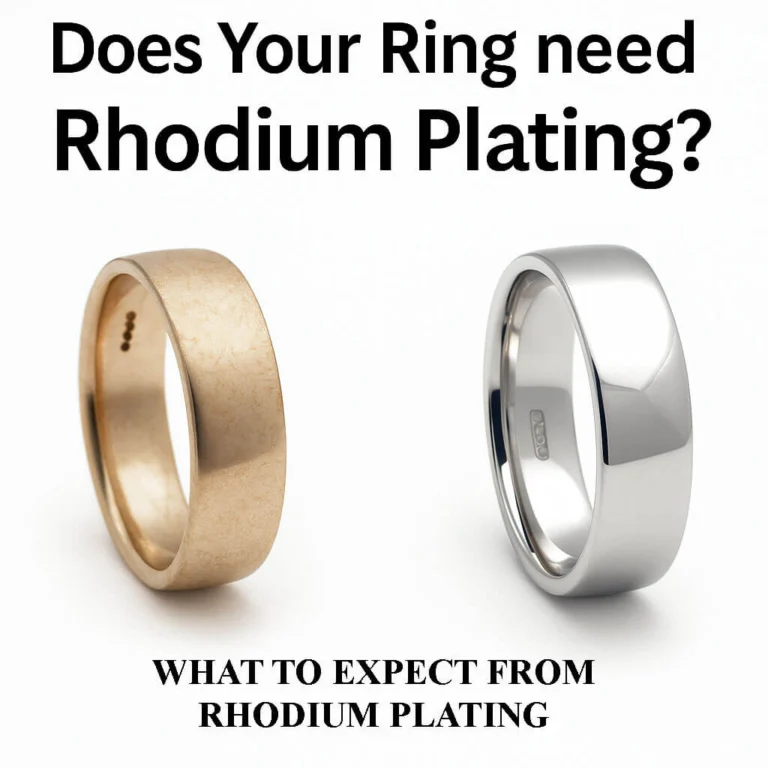
Rhodium plating is a thin electroplated layer of rhodium applied to jewellery, most commonly white gold. Rhodium is a rare precious metal from the platinum group. It is bright white, reflective, and resistant to tarnish.
The plating sits only on the surface. It does not strengthen the ring. It does not change the gold underneath. Its role is visual.
Why white gold is plated
White gold is yellow gold mixed with whitening alloys. How white it appears depends entirely on those alloys.
Lower-cost white gold has a noticeable cream or yellow tone. Rhodium plating masks that colour and produces a bright white finish at the point of sale.
Higher-quality white gold is naturally much whiter and relies far less on plating.
White gold colour quality in practice
From a workshop perspective, white gold broadly falls into four informal colour grades:
Excellent white
Naturally bright. Rhodium optional rather than essential.
Acceptable white
Slight warmth. Plating improves appearance.
Cream-toned
Relies heavily on plating. Colour change is obvious once it wears.
Yellow-leaning
Plating does all the work. Complaints are common when it fades.
Most mass-produced jewellery sits in the third or fourth category.
How to tell if white gold is good quality
You cannot tell once a ring is plated.
The highest quality white gold uses palladium as the primary whitening alloy. Palladium produces a much whiter metal throughout the ring, not just on the surface. Because palladium prices have risen sharply, palladium-rich white gold is now the most expensive white gold alloy available.
A simple question to ask is:
“Is this palladium-rich white gold?”
If the seller cannot tell you the alloy composition beyond “18ct white gold”, that usually answers the question.
What fresh rhodium plating looks like
New rhodium plating is extremely bright. It is whiter than platinum and brighter than unplated white gold. This is why white gold rings often look striking when new.
That appearance is temporary.
How long does rhodium plating last?
For rings worn every day, replating is typically needed every 6 to 18 months.
Wear appears first underneath the ring, then along edges and contact points. You will usually see a shift from bright white to cream or pale yellow in those areas.
Modern habits accelerate wear. Frequent handwashing and alcohol-based hand sanitisers remove plating faster than they did 20 years ago.
Can a ring be replated too often?
Yes.
Before replating, the old coating must be removed and the surface polished. Each polish removes a tiny amount of gold. Over time, repeated replating and polishing gradually thins the ring, especially at claws, settings, and fine edges.
Occasional replating causes little harm. Decades of frequent replating does.
I have seen rings worn for 5 to 10 years return with claws so thin they required rebuilding, not because of wear alone, but because gold had been polished away session by session.
Rhodium plating and jewellery repairs
Any repair or alteration removes rhodium plating.
Heat from resizing or claw work strips it immediately. Polishing removes what remains. Replating is always required after work is done.
This often surprises customers who have recently paid for replating, but it is unavoidable.
Skin sensitivity and nickel
Rhodium itself is nickel-free. While intact, it acts as a temporary barrier between the skin and the underlying alloy.
Once the plating wears through, that protection is gone. If nickel sensitivity is the main concern, plating should not be treated as a permanent solution.
Plating yellow gold
Rhodium can be applied to yellow gold, but it rarely works well long term.
As soon as the surface is scratched, yellow shows through. The contrast is obvious and unattractive. In practice, the only customer complaints we ever had about rhodium plating came from yellow gold pieces. For that reason, we stopped offering it.
If a white appearance matters, a naturally white metal is the better choice.
Wearing rings together
Any two rings worn together will wear each other.
When gold is worn next to a harder metal, the gold shows wear sooner. This does not mean the harder ring is damaging it unfairly. It is simply that the softer metal loses material more visibly.
Cost of rhodium plating in the UK
Typical pricing sits between £40 and £70, depending on condition and preparation required. This usually includes:
Removal of old plating
Surface polishing
New rhodium application
Final finishing polish
Repairs, resizing, or heavy scratch removal increase cost.
When it can make sense to stop replating
If your white gold has developed a warmer tone and you are comfortable with it, there is no functional reason to replate. The gold underneath is exactly what you paid for. Only the surface appearance has changed.
Some people prefer the natural patina once they understand what it represents.
Alternatives to rhodium-plated white gold
If you want a white ring without ongoing replating, there are options.
Palladium-rich white gold
Naturally white throughout. Plating becomes optional rather than essential.
Platinum
White, dense, unplated. Develops patina rather than losing colour.
Modern alternative metals
Materials such as cobalt, titanium, and zirconium are naturally white and require no surface coatings.
At Titan Jewellery, we specialise in metals that eliminate the replating cycle entirely. When white gold is made, rhodium is still applied where appropriate, but with full understanding of its role.
Common questions about rhodium plating
What is rhodium and why is it used in jewellery
It provides a bright white, reflective surface and resists tarnish.
How thick is rhodium plating
Measured in microns. Thickness affects lifespan, not strength.
Does rhodium plating make jewellery hypoallergenic
It can act as a temporary nickel-free barrier while intact.
How can I tell when replating is needed
Cream or yellow tones showing through, especially underneath.
Can replating be done while I wait
Sometimes, but preparation time affects quality.
Will rhodium plating hide scratches
Minor surface marks may soften. Deeper damage remains.
Is rhodium plating safe for gemstones
Most gemstones are safe during rhodium plating. Porous stones such as pearls, opals, turquoise, and emeralds usually need to be removed or protected prior.
Can silver be rhodium plated
Yes. Commonly done to slow tarnishing.
Does plating affect resizing or repairs
All repairs remove plating and require replating afterwards.
Are there environmentally friendlier options
Choosing a metal that does not require plating at all.
What should I choose if I want a white ring without plating
Platinum, palladium-rich white gold, or modern alternative metals.
Final advice from long-term bench experience
Rhodium plating is neither good nor bad. It is a finish with a lifespan.
If you choose it, do so knowing:
When people understand that upfront, they make better long-term choices and have fewer disappointments later.





 Winner of King award for Alternative Metal Rings
 Winner of Theo Paphitis (Dragons Den) Small Business Award
 We are fully pci-dss compliant
 Security Headers rate us A+ for website security
 We are registered with the ico for data protection
 We are members of The Guild of Jewellery Designers