

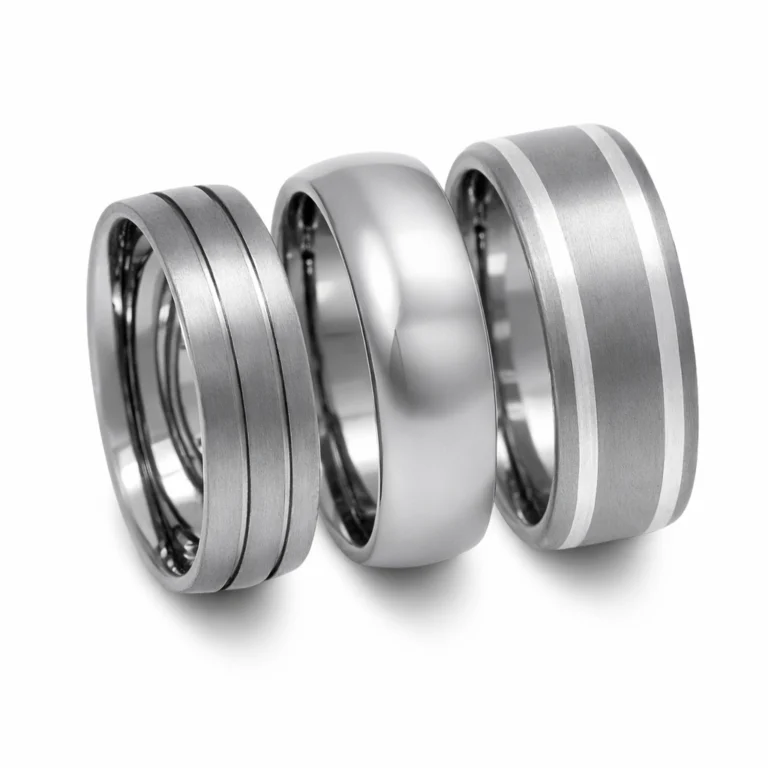
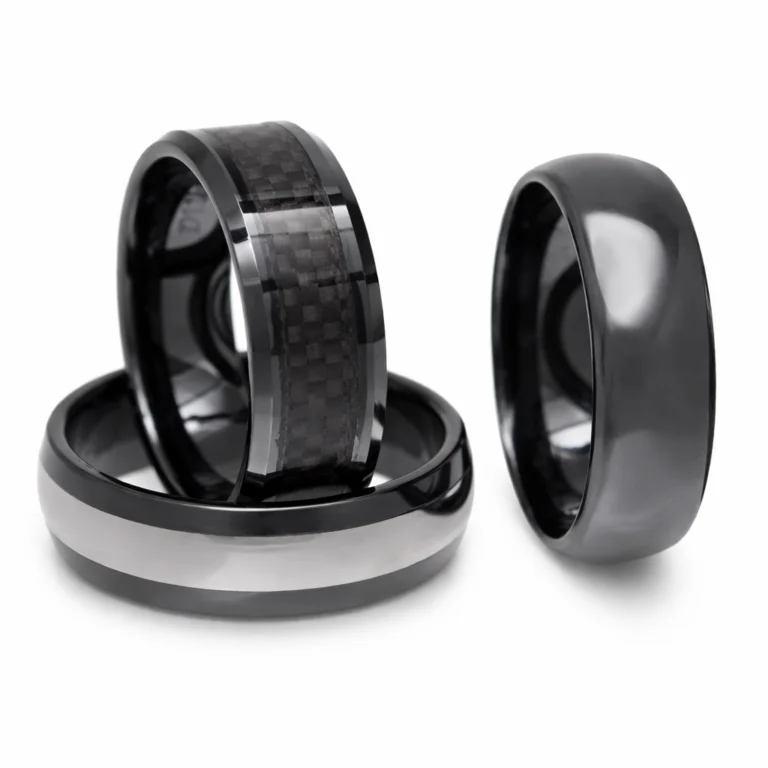
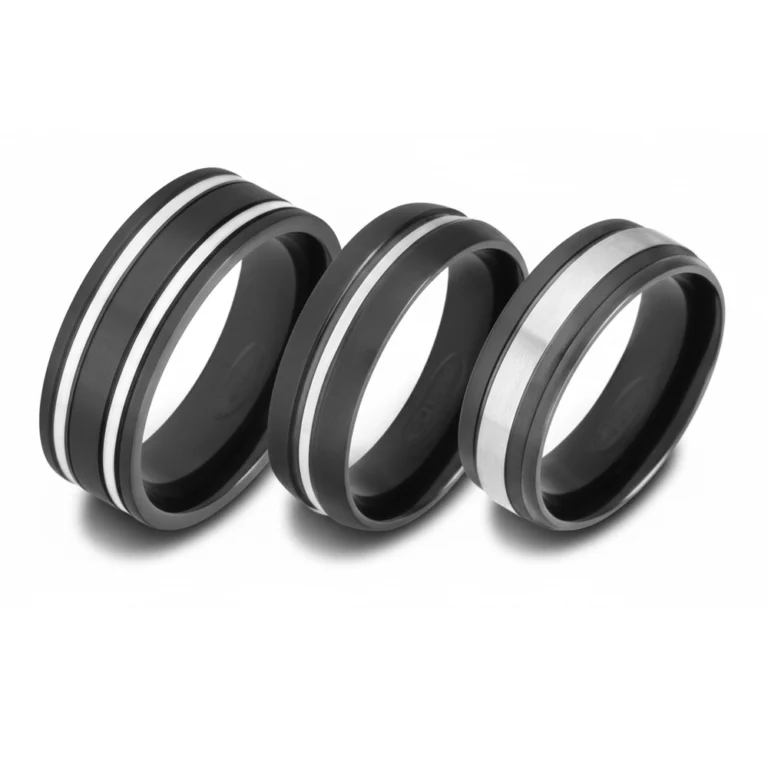
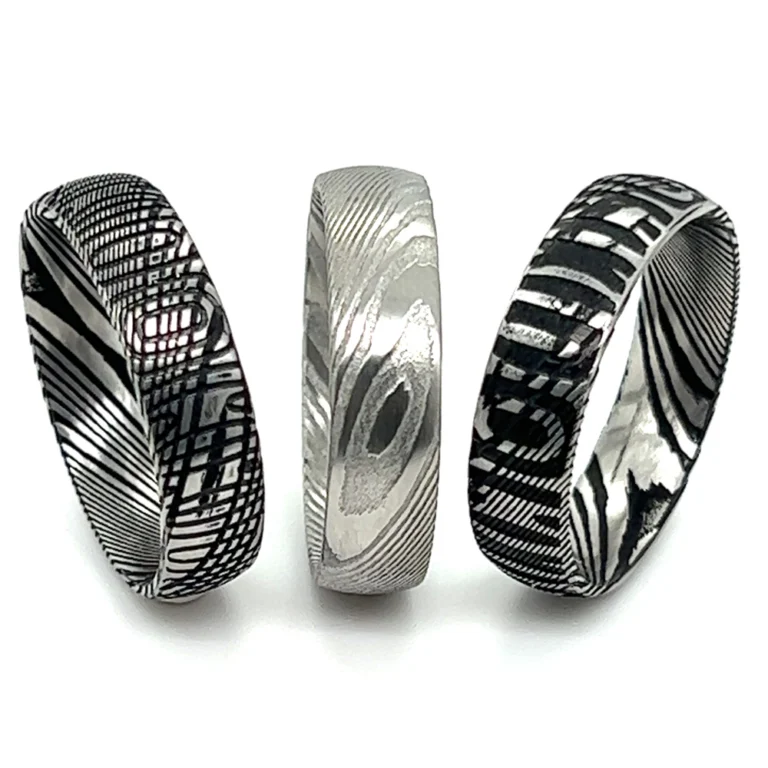
Specific Gravity 4.5 Very light on the hand Specific Gravity 6.0 Light with a solid feel Specific Gravity 6.5 Moderate weight Specific Gravity 7.9 – 8.0 Mid-weight feel Specific Gravity 8.9 Noticeably heavier than titanium Specific Gravity 10.4 Traditional metal weight Specific Gravity 10.9 – 12.7 Varies by alloy composition Specific Gravity 15.2 – 15.9 Denser than 9ct gold Specific Gravity 12.0 Heavier than silver Specific Gravity 14.3 Heavy, solid feel Specific Gravity 16.6 Dense and weighty Specific Gravity 21.4 One of the heaviest ring metalsTitanium
Zirconia Ceramic
Zirconium
Damascus Steel
Cobalt
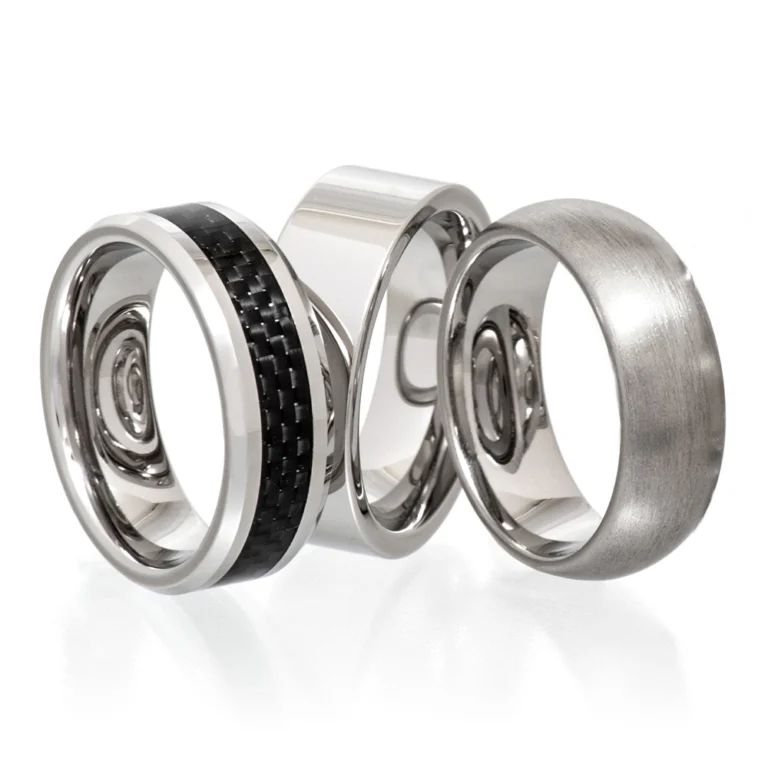
Sterling Silver
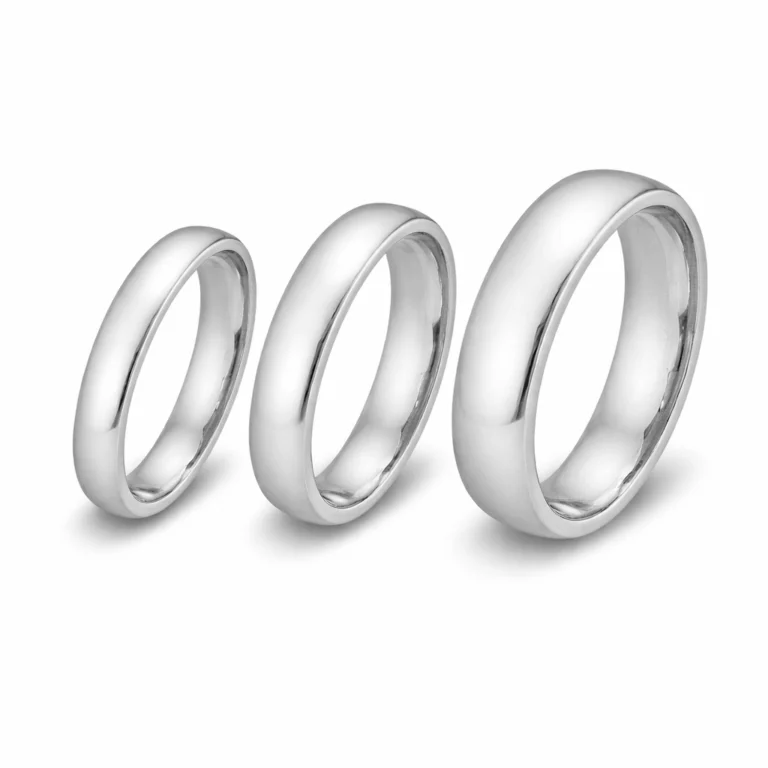
Gold (9ct)
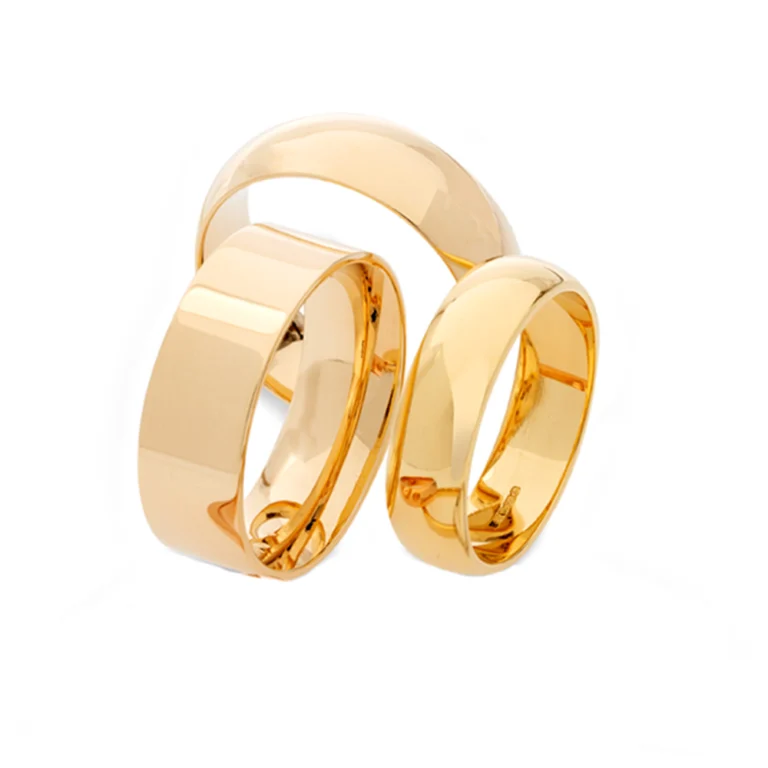
Gold (18ct)
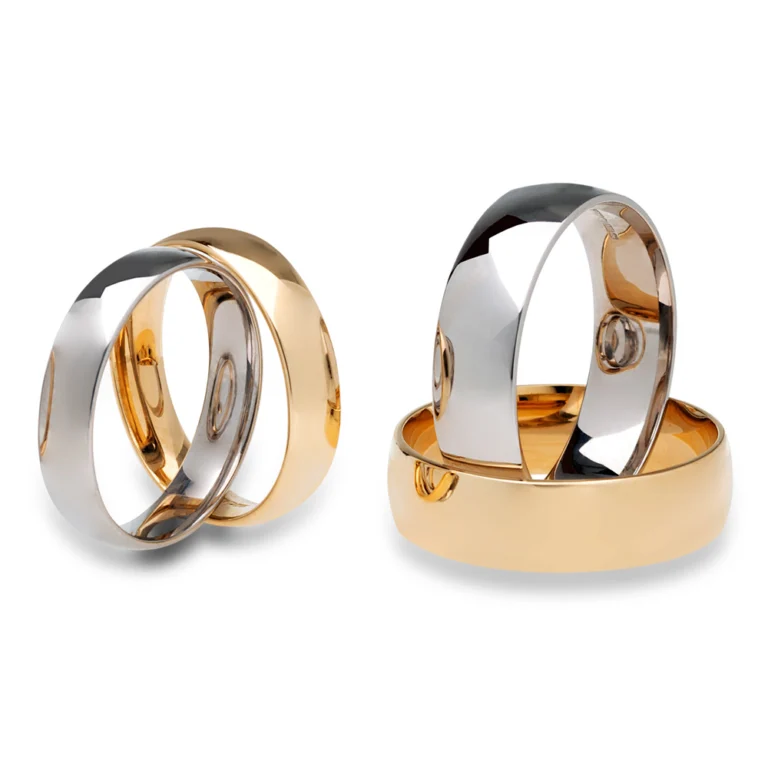
Palladium
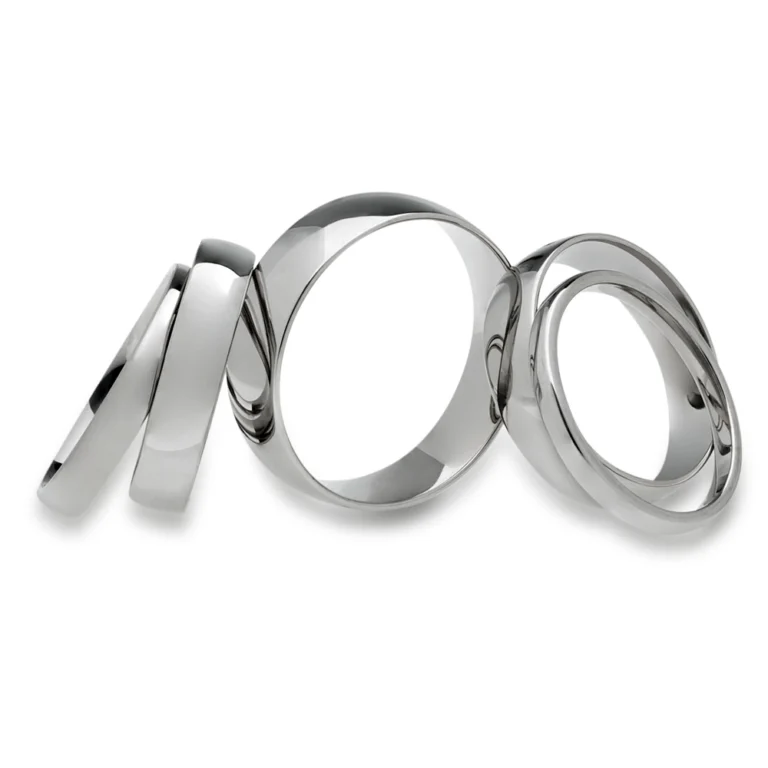
Tungsten Carbide
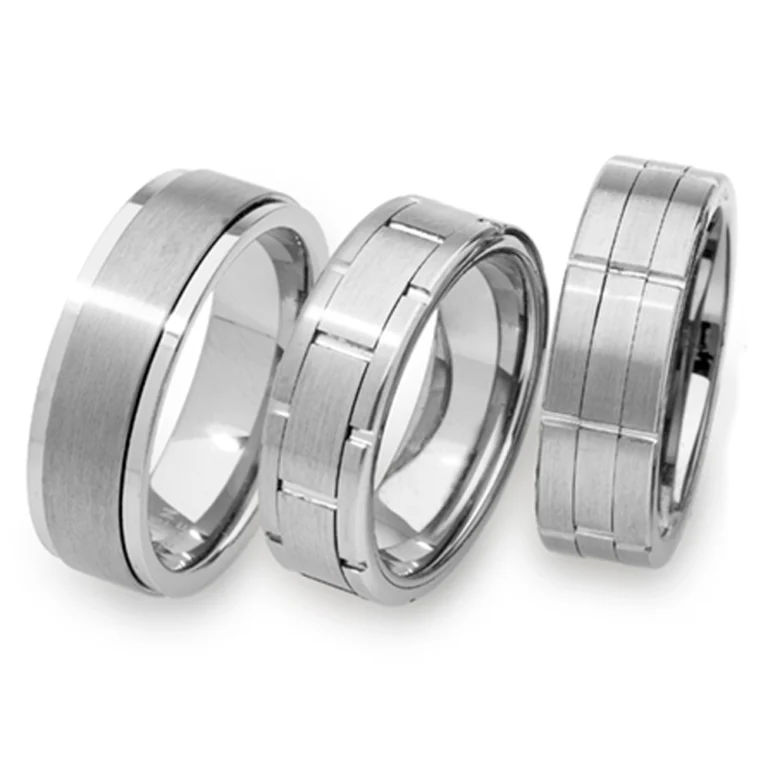
Tantalum
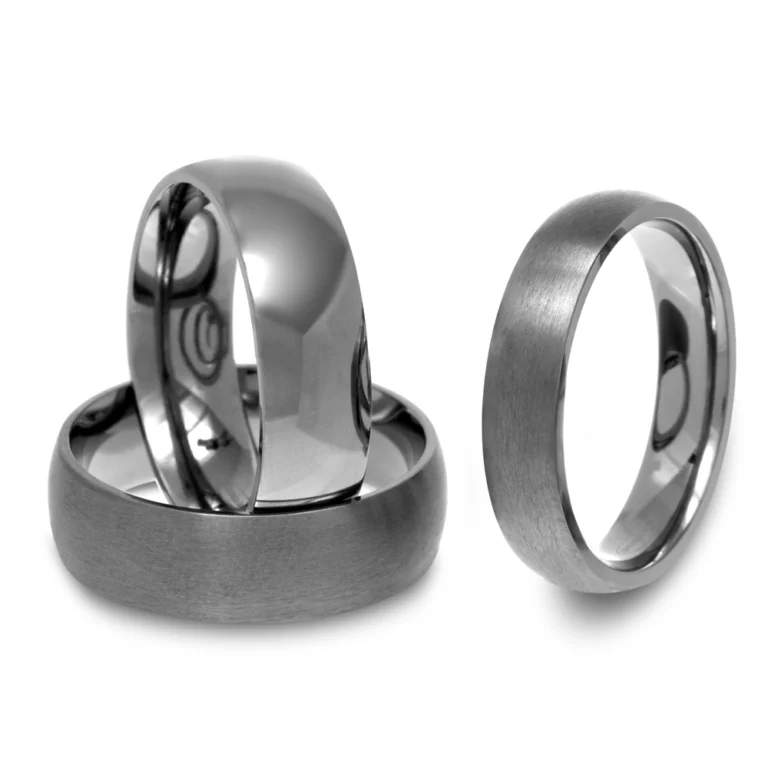
Platinum
Understanding specific gravity of ring metals
Specific gravity measures density. It shows how heavy different metals are relative to one another when made to the same size and shape. Understanding specific gravity of ring metals helps explain why some rings feel almost weightless while others feel noticeably solid on the hand.
A metal with higher specific gravity will feel heavier. For example, titanium (4.5) feels significantly lighter than platinum (21.4) when both rings share the same width and profile. This difference in ring weight is due to platinum being nearly five times denser. The specific gravity of ring metals directly determines how a ring feels during daily wear.
Specific gravity values are used to compare ring metal weight directly. They do not indicate durability, scratch resistance, or quality. Actual ring weight will still vary depending on width, depth, profile, finger size, and internal shaping.
Specific gravity provides a consistent reference for understanding metal density and how different ring materials compare by weight alone.