

Mohs Hardness of Ring Metals
A comparison of ring materials by scratch resistance, based on the Mohs hardness scale.
What Mohs hardness tells you in everyday wear
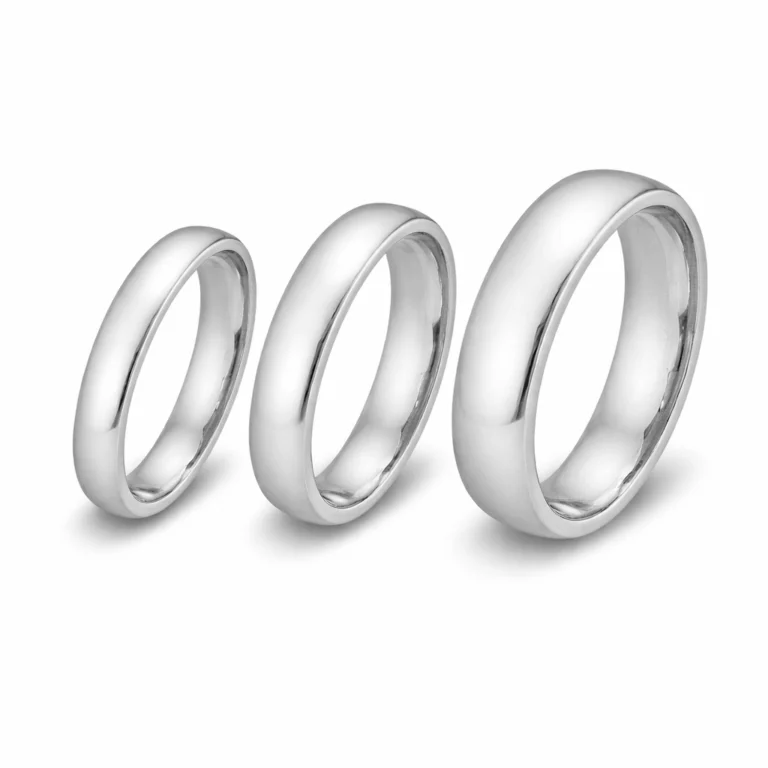
All ring materials show surface wear in everyday use. Scratches and marks are a normal part of wearing a ring and do not indicate failure or poor quality. The Mohs hardness scale compares how different materials respond to surface contact. A comparison of ring materials by scratch resistance, based on the Mohs hardness scale.Sterling Silver

Mohs Hardness
2.5
Surface marks appear quickly in wear
Deforms under impact rather than cracking
Gold (9ct)
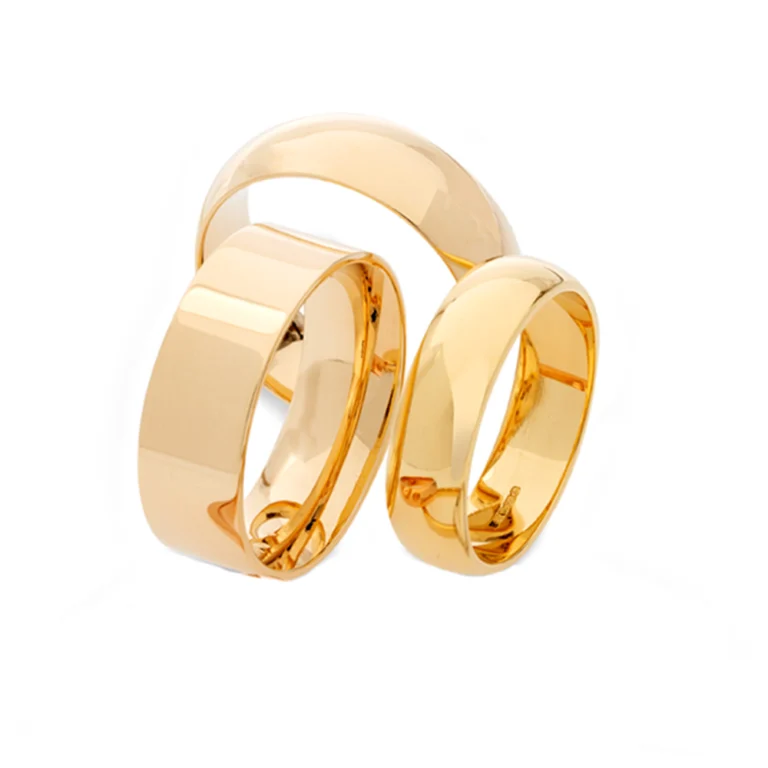
Mohs Hardness
2.5
Surface wear appears quickly, especially on polished finishes
Deforms under impact rather than cracking
Gold (18ct)
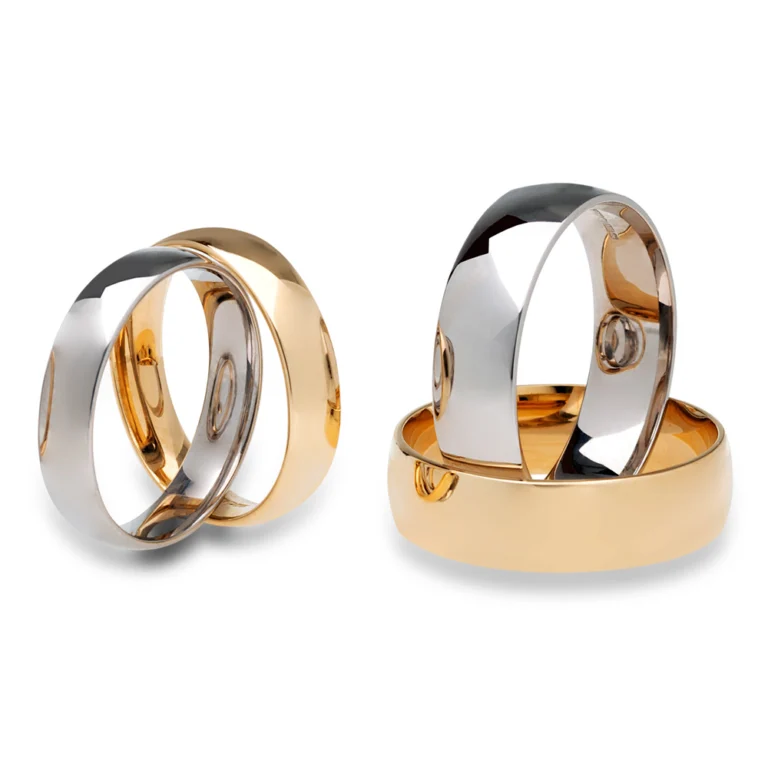
Mohs Hardness
2.5
Surface wear appears quickly, especially on polished finishes
Deforms under impact rather than cracking
Platinum
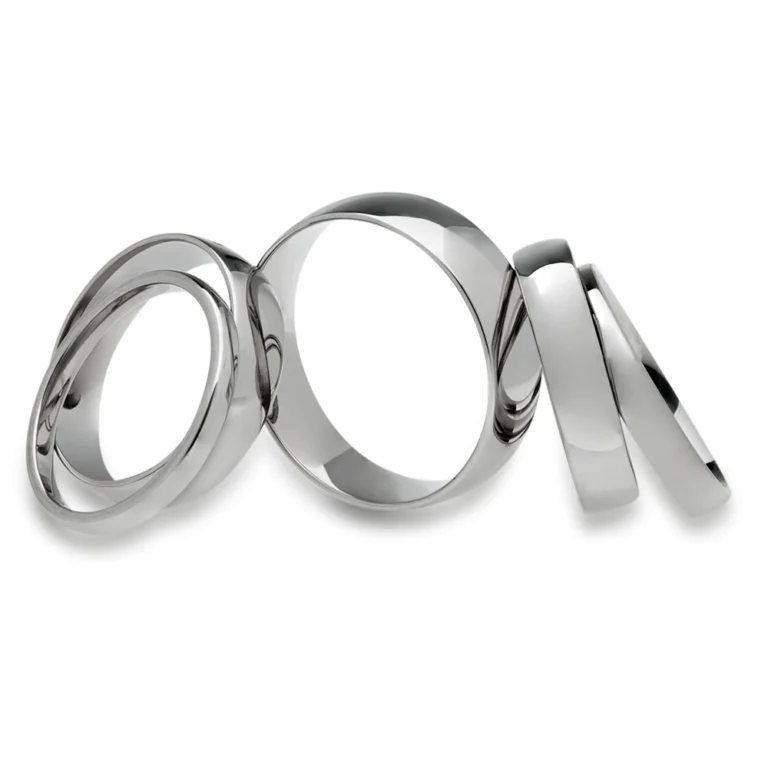
Mohs Hardness
4.5
Surface marks appear readily in normal wear
Metal displaces under impact rather than cracking
Palladium
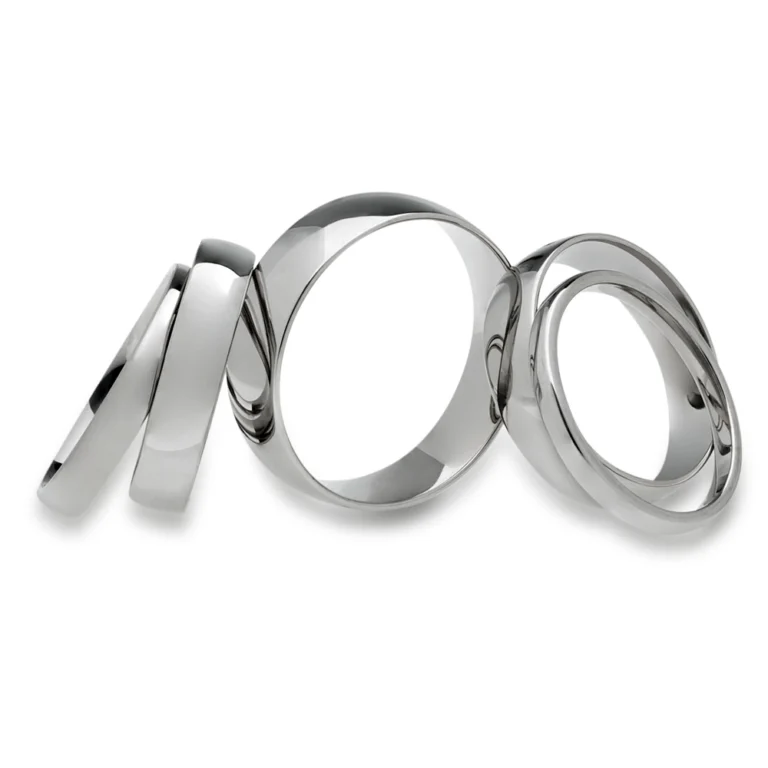
Mohs Hardness
4.5
Surface wear appears in everyday use
Deforms under impact rather than cracking
Damascus Steel
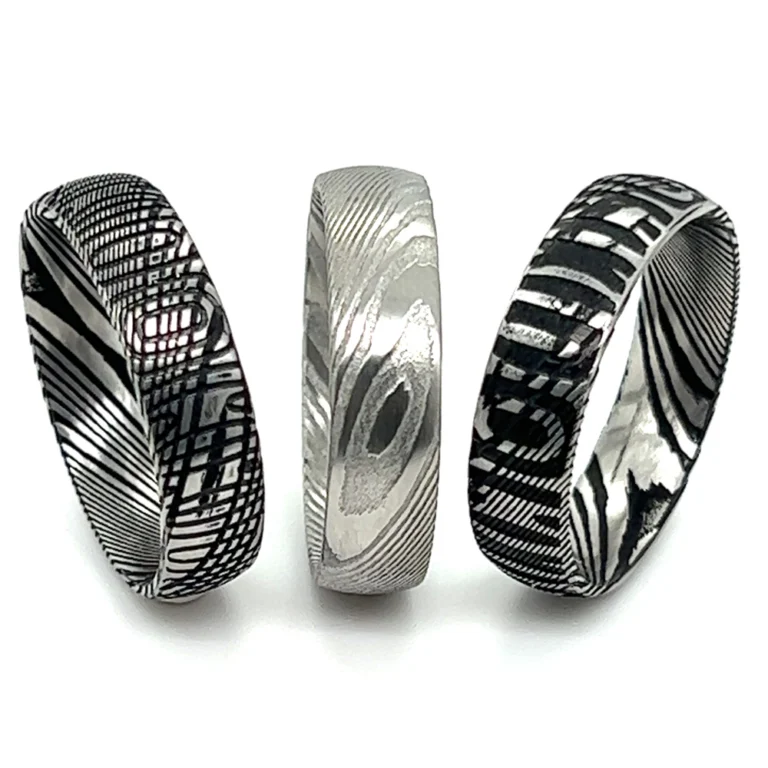
Mohs Hardness
5.5 - 6.5
More resistant to surface marking than precious metals
Tough in wear and not prone to cracking
Titanium
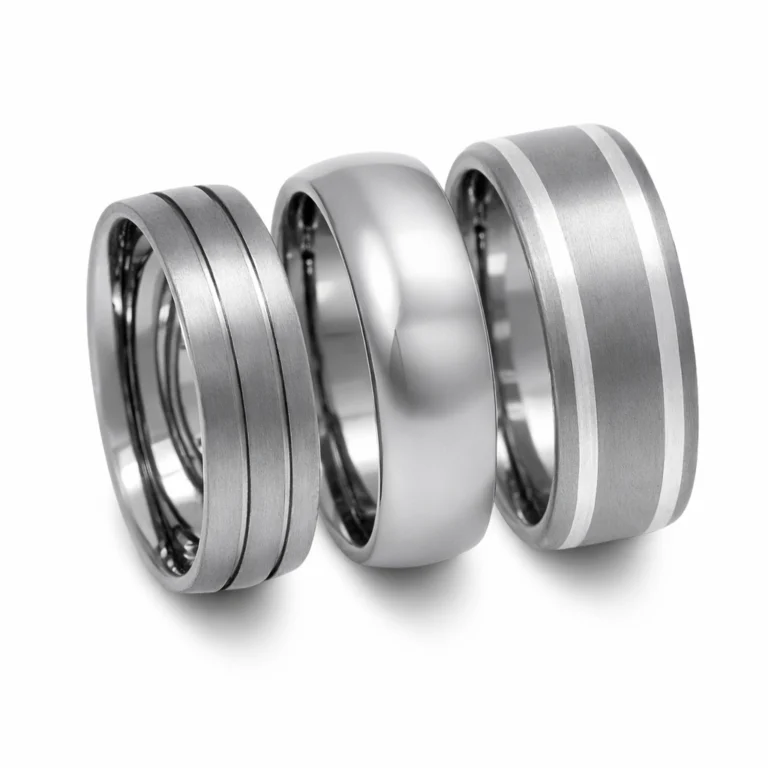
Mohs Hardness
6.0
Surface marking appears early in wear, particularly on polished finishes
Very tough and resistant to cracking under impact
Tantalum
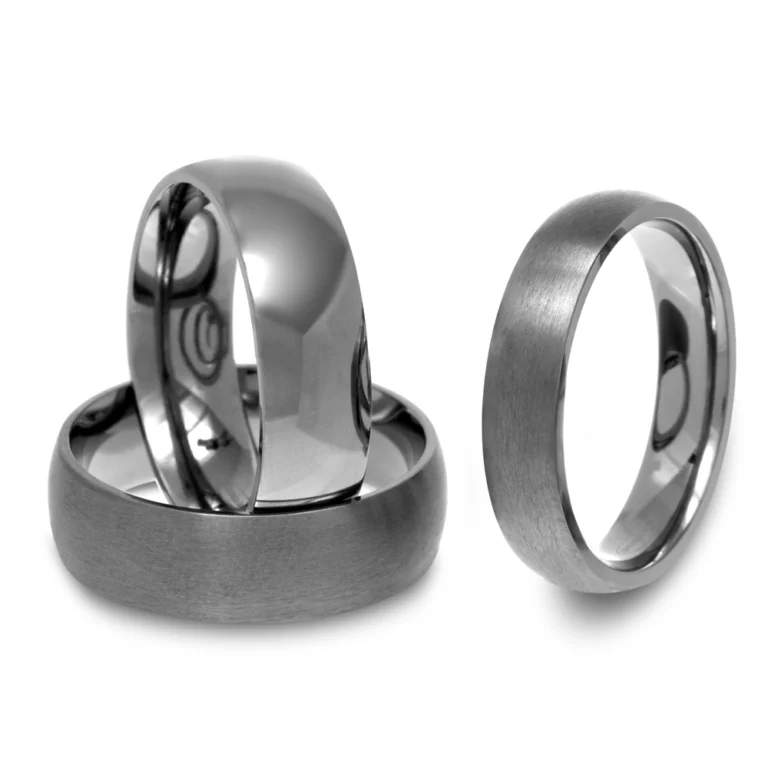
Mohs Hardness
6.5
Surface marking appears readily in wear
Extremely ductile and deforms rather than cracking
Cobalt
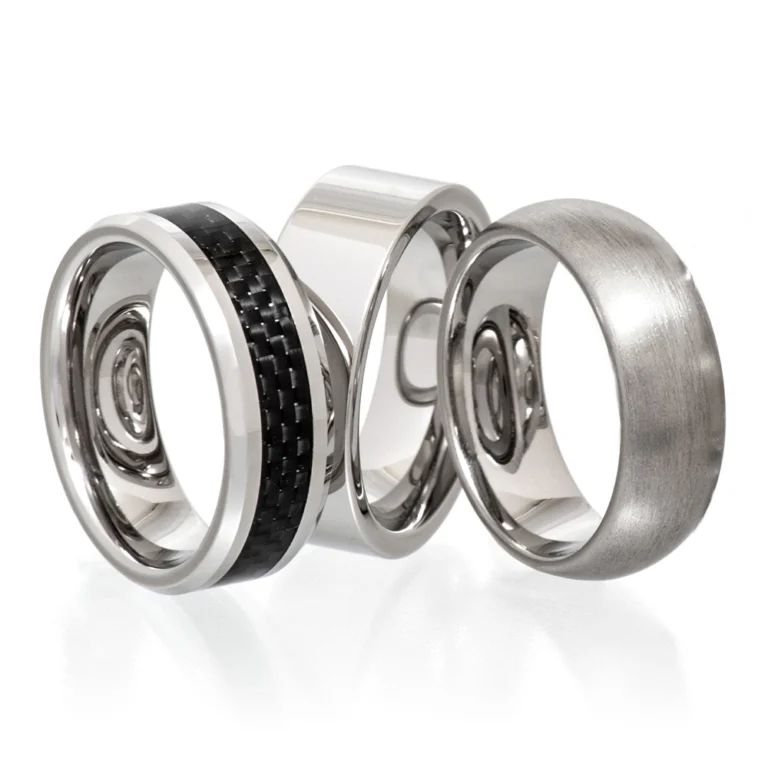
Mohs Hardness
7.0
Good resistance to surface scratching
Very tough in wear and unlikely to deform or break
Zirconium
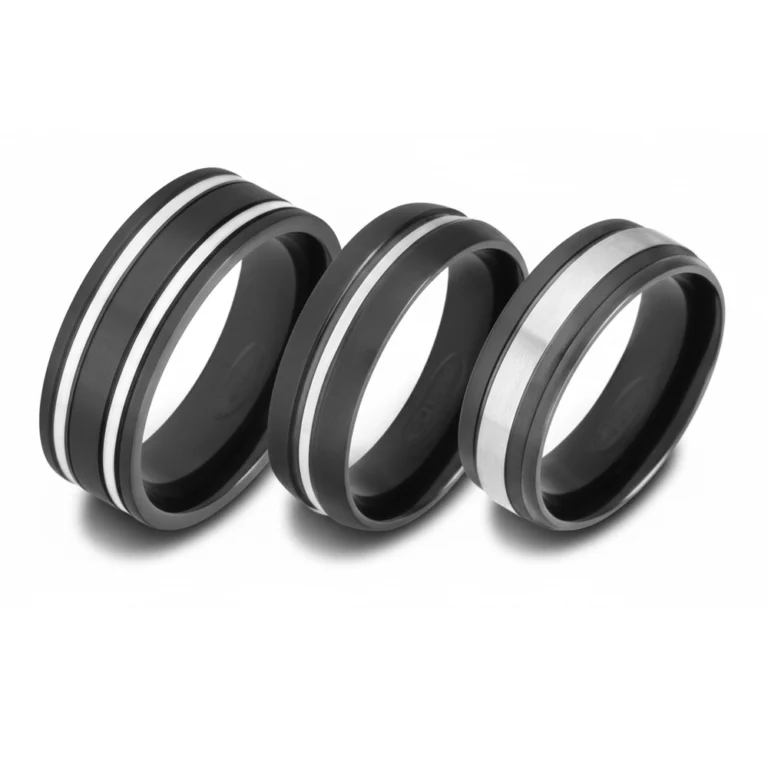
Mohs Hardness
6.0 - 8.0
Black oxide layer offers improved scratch resistance
Tough in everyday use and not prone to cracking
Zirconia Ceramic
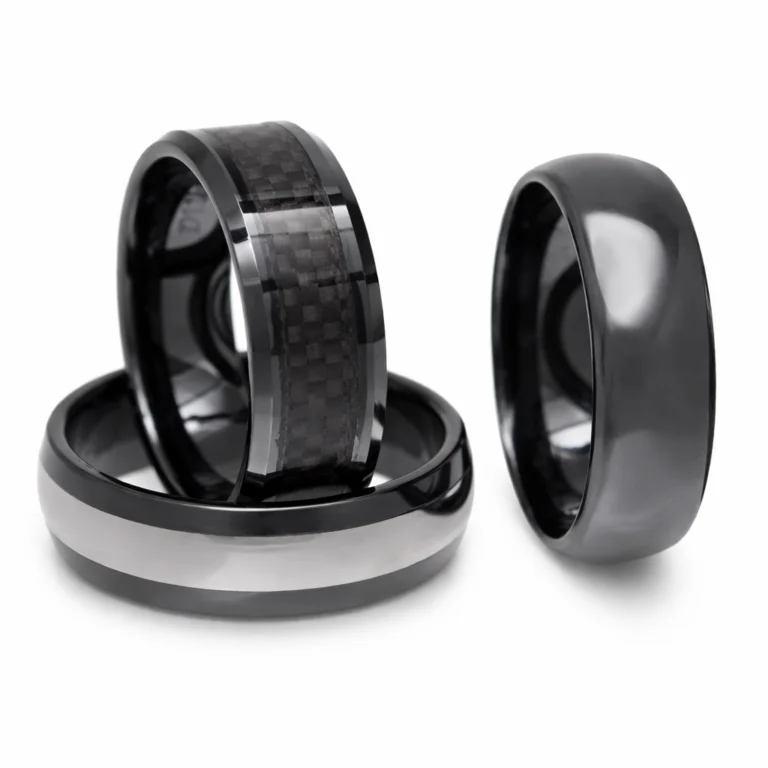
Mohs Hardness
8.0
Very high resistance to surface scratching
Brittle under extreme impact and may fracture
Tungsten Carbide
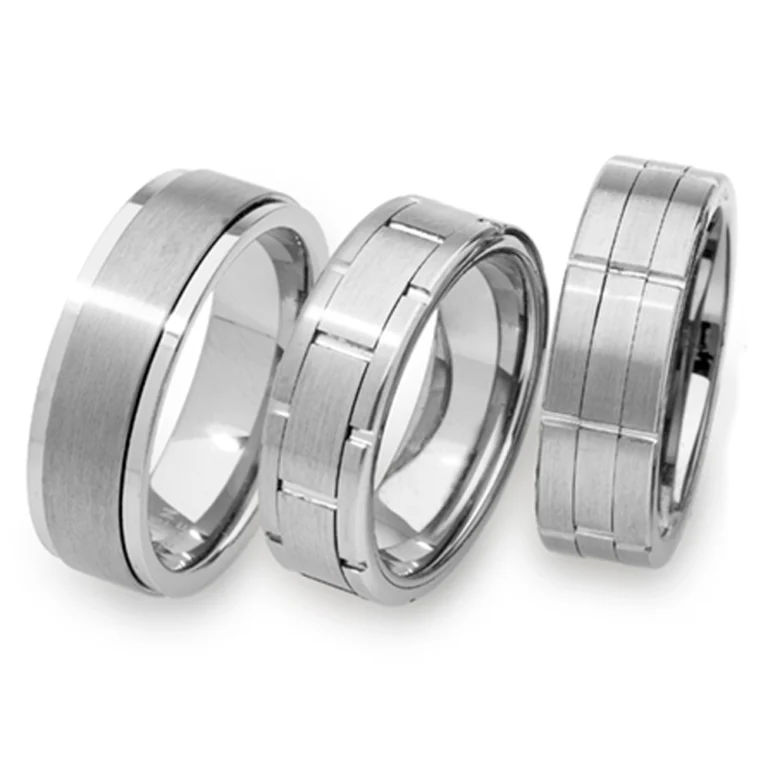
Mohs Hardness
9.0
Very high resistance to surface scratching
Brittle under extreme impact and may fracture

Understanding Mohs hardness of ring metals
The Mohs hardness scale measures scratch resistance. It shows how well a material resists surface marking when contacted by another material. A metal with a higher value on the hardness scale is more resistant to scratching than a metal with a lower value when tested under controlled conditions.
Lower Mohs values indicate softer metals that show surface wear more readily but tend to deform rather than crack under impact. Higher values indicate more scratch resistant rings but may be more brittle. For example, gold (2.5–3.0) shows surface wear quickly but will not crack or shatter. Tungsten carbide (8.0–9.0) is highly resistant to scratching but may fracture if subjected to a sharp, heavy blow.
Mohs hardness values are used to compare scratch resistance directly. They do not indicate toughness, ring durability, or quality. Actual surface wear will still vary depending on ring finish, width, daily activities, and contact with harder materials.
Understanding metal hardness provides a consistent reference for comparing how different ring materials respond to scratching in everyday wear.
Related material properties
Mohs hardness measures scratch resistance. For information on how different ring materials compare by weight, see Specific gravity and ring weight. For an overview of how hardness and density work together, see Hardness & Density.