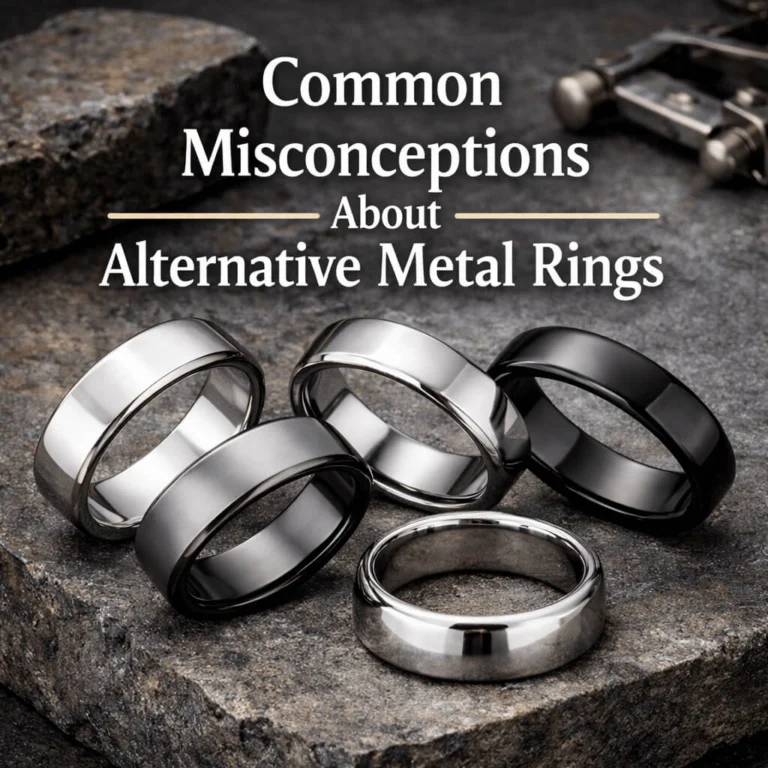
Common misconceptions about ring durability
Durability is frequently misunderstood. Hardness, strength, weight, and longevity are often treated as interchangeable, when they describe very different behaviours.
A very hard material may resist scratching but crack under impact. A softer material may mark more easily but survive decades of wear. Light rings are sometimes assumed to be weak, while heavy rings are assumed to last longer. In real use, none of these assumptions consistently hold true.
A detailed breakdown of these misunderstandings is covered in our guide to alternative metal rings misconceptions:
/alternative-metal-rings-misconceptions/
Traditional precious metals
1. Silver (Sterling 925)
Our silver rings are made from 92.5% sterling silver and lathe-turned for structural consistency. Each is finished with a full UK hallmark.
Silver is relatively soft. It rarely fails structurally and can be worn daily for many years, but it shows surface wear quickly and develops a visible patina with use.
2. Gold (9ct and 18ct)
Gold rings are typically made in 9ct or 18ct yellow or rose gold. White gold is produced by alloying rather than being naturally white.
Gold marks easily compared with most alternative metals. This is normal behaviour. Palladium-alloyed white gold maintains its colour without relying on surface plating.
Durability: Moderate
Tarnish resistance: Excellent
Scratch resistance: Low
Brittle under impact: No
Hypoallergenic: Varies by alloy, nickel sensitivity is the most common issue
Weight: Medium to heavy
3. Platinum
Platinum is dense and naturally white. It wears slowly and retains its mass over time.
Surface marks develop as material displacement rather than material loss, creating a smooth patina rather than thinning the ring.
Durability: High
Tarnish resistance: Excellent
Scratch resistance: Moderate
Brittle under impact: No
Hypoallergenic: Excellent
Weight: Heavy
4. Palladium
Palladium is part of the platinum group of metals. It is lighter than platinum and similar in appearance.
Wear characteristics are good, but reduced availability has made it a less common long-term choice.
Durability: Good
Tarnish resistance: Excellent
Scratch resistance: Moderate
Brittle under impact: No
Hypoallergenic: Excellent
Weight: Light to medium
Modern alternative metals
5. Titanium
Titanium rings are lightweight and structurally strong. They resist bending and deformation in normal use.
Surface marks develop gradually and evenly. Engraving contrast is typically very high.
Durability: High
Tarnish resistance: Excellent
Scratch resistance: Moderate
Brittle under impact: No
Hypoallergenic: Excellent and biocompatible
Weight: Light
6. Tungsten Carbide
Tungsten carbide is extremely hard and highly resistant to surface scratching.
The trade-off is that it fractures under extreme impact rather than deforming. This makes it well suited to low-impact daily wear, but less suitable for heavy manual or high-impact environments.
7. Damascus Steel
Damascus steel rings are formed from layered stainless steels, producing a visible pattern through the material.
Durability is comparable to other steel alloys, with moderate surface wear over time.
8. Zirconium
Zirconium is naturally grey. Heat treatment forms a stable black oxide layer on the surface.
Deep scratches can reveal the base metal beneath the oxide layer. This is cosmetic and does not affect structural integrity.
Durability: High
Tarnish resistance: Excellent
Scratch resistance: Moderate
Brittle under impact: No
Hypoallergenic: Very good
Weight: Medium
9. Zirconia Ceramic
Zirconia ceramic rings are extremely hard and retain a near-flawless surface finish.
They are brittle. Sharp impacts or drops can cause cracking.
Durability: High
Tarnish resistance: Excellent
Scratch resistance: Very high
Brittle under impact: Yes, hard impact
Hypoallergenic: Excellent
Weight: Light to medium
10. Tantalum
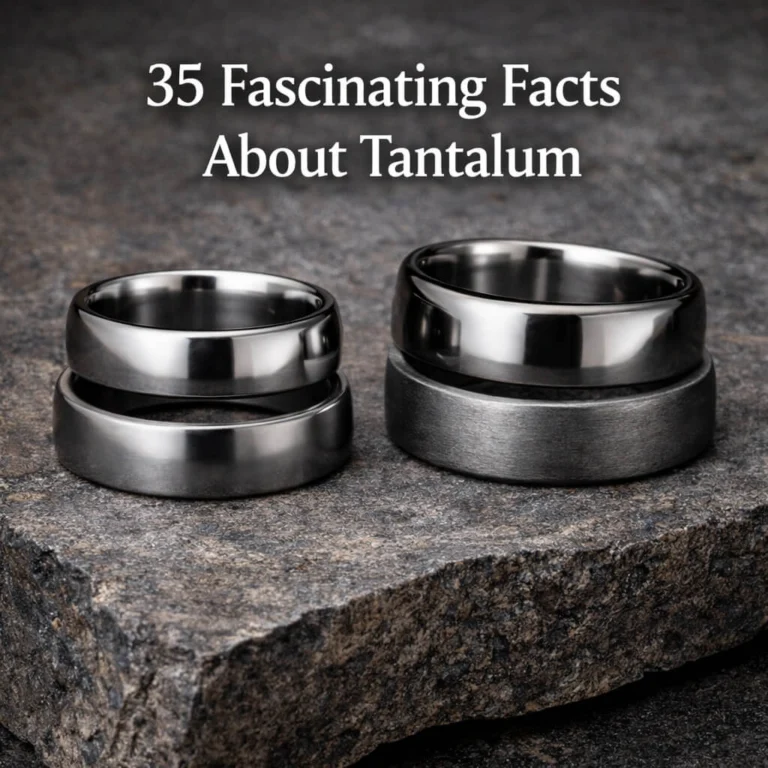
Tantalum is dense, dark grey, and smooth to wear. It develops a natural patina with use.
It is tough rather than brittle and performs well under long-term daily wear. Its density gives a weight similar to traditional precious metals.
Durability: High
Tarnish resistance: Excellent
Scratch resistance: Moderate
Brittle under impact: No
Hypoallergenic: Excellent and biocompatible
Weight: Heavy
11. Cobalt
Cobalt alloys are bright white and similar in appearance to platinum.
They offer high scratch resistance without brittle behaviour, making them suitable for demanding daily use.
Exotic and composite materials
12. Meteorite
Meteorite rings are made from iron-nickel meteorite, often paired with a liner for stability.
They are structurally sound but prone to surface oxidation. The Widmanstätten pattern is a natural crystal structure formed during extremely slow cooling in space.
13. Superconductor (Titanium–Niobium and Copper)
Superconductor rings are machined from decommissioned scientific material containing fine filaments of a titanium–niobium alloy within a copper matrix.
The material was originally produced for specialised technical applications. When machined into rings, the ends of the individual filaments are visible along the sides, creating a distinctive layered structure.
The copper matrix is sealed during manufacture. If that seal is compromised through heavy wear or damage, copper can oxidise or react with skin, which is a characteristic of this composite material.
Emergency removal and impact behaviour
In real emergencies, how a ring behaves under force matters more than surface hardness.
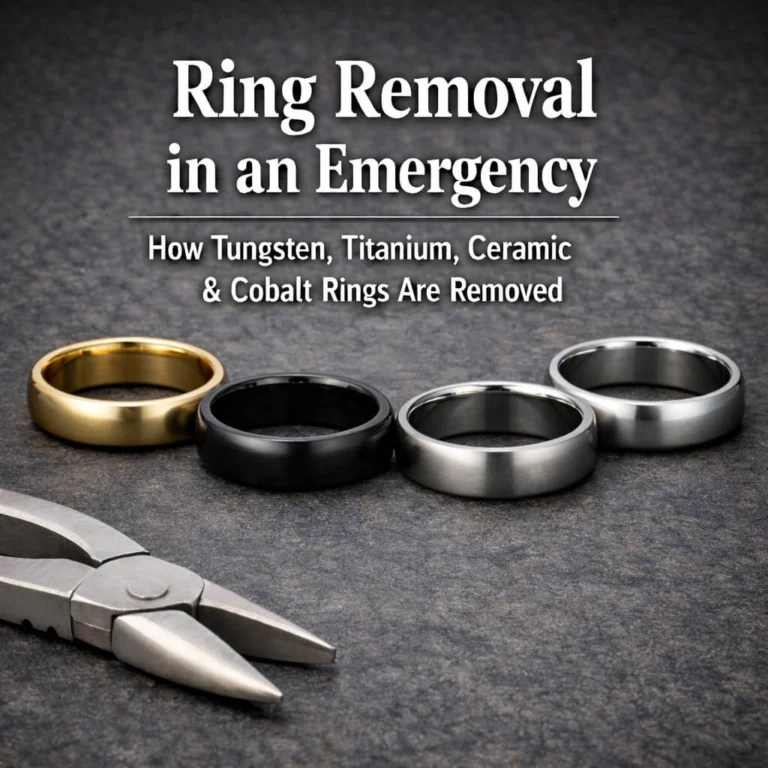
Brittle materials such as tungsten carbide and zirconia ceramic tend to fracture under controlled pressure. Tough metals like titanium, tantalum, cobalt, steel, and precious metals deform and must be cut.
A practical explanation of how different ring materials are removed in real emergency situations is covered in our ring removal guide:
/how-to-remove-rings-in-an-emergency/
Why weight matters
Ring weight affects how a ring feels during long-term wear. Lightweight materials such as titanium and ceramic are often preferred for active use or by those unaccustomed to wearing jewellery. Heavier materials such as platinum and tantalum feel more substantial and traditional on the hand.
Weight does not correlate directly with durability, but it strongly influences comfort and preference.
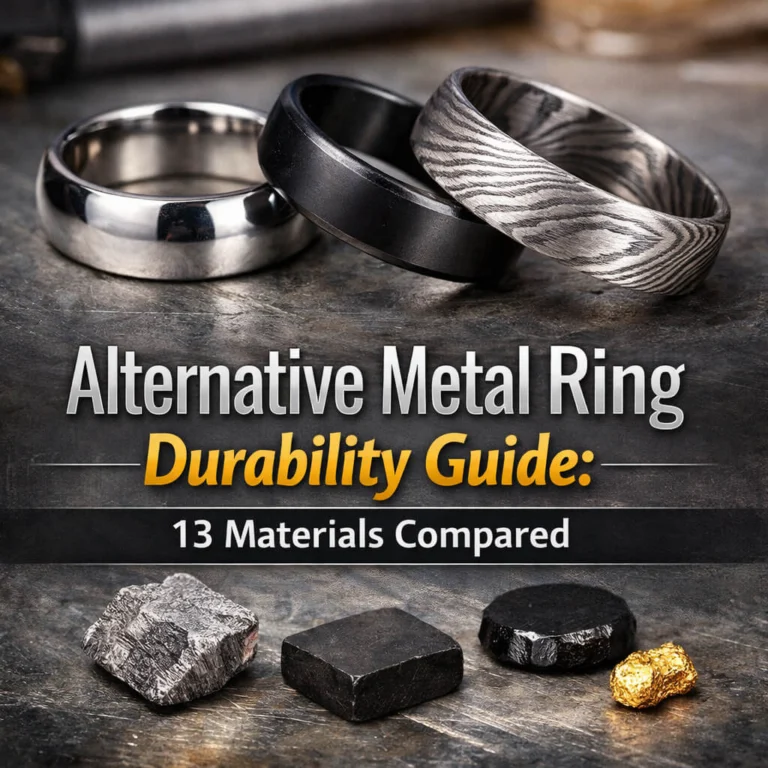
Alternative metal durability comparison
| Material | Tarnish resistance | Scratch resistance | Brittle under impact | Hypoallergenic | Weight |
|---|
| Silver | Moderate | Low | No | Moderate | Medium |
| Gold | Excellent | Low | No | Variable | Medium to heavy |
| Platinum | Excellent | Moderate | No | Yes | Heavy |
| Palladium | Excellent | Moderate | No | Yes | Light to medium |
| Titanium | Excellent | Moderate | No | Yes | Light |
| Tungsten Carbide | Excellent | High | Yes, extreme impact | Good | Heavy |
| Damascus Steel | Good | Moderate | No | Yes | Medium |
| Zirconium | Excellent | Moderate | No | Very good | Medium |
| Zirconia Ceramic | Excellent | Very high | Yes, hard impact | Excellent | Light to medium |
| Tantalum | Excellent | Moderate | No | Excellent | Heavy |
| Cobalt | Excellent | High | No | Very good | Medium to heavy |
| Meteorite | Low | Moderate | No | Excellent | Medium |
| Superconductor | Excellent | Moderate | No | Good | Medium |
Material recommendations by lifestyle
Frequent manual or hands-on work: Titanium, tantalum, cobalt
Low-impact daily wear with minimal surface marking: Tungsten carbide, zirconia ceramic
Preference for traditional weight and feel: Platinum, tantalum
Sensitive skin: Titanium, tantalum, zirconium, ceramic
Lightest wearing options: Titanium, zirconia ceramic
Frequently asked questions
What is the most durable ring material?
There is no single “most durable” material. Titanium, tantalum, and cobalt offer the best balance of impact resistance and long-term wear. Tungsten and ceramic resist scratching exceptionally well but are brittle under impact.
Do titanium rings scratch?
Titanium develops surface marks gradually with wear. It resists bending and deformation but is not scratch-proof.
Can tungsten carbide rings crack?
Yes. Tungsten carbide can fracture under severe impact. This brittleness is the trade-off for very high scratch resistance.
Can alternative metal rings be resized?
Most alternative metals cannot be traditionally resized and require remanufacturing. Precious metals and some steel alloys can be resized using conventional methods.
Choosing the right material
No ring material is perfect for every person. The right choice depends on how you use your hands, how you feel about surface wear, and whether you prioritise weight, appearance, or impact behaviour.
Understanding how materials behave in real ownership leads to better decisions than relying on hardness ratings or marketing labels alone6





 Winner of King award for Alternative Metal Rings
 Winner of Theo Paphitis (Dragons Den) Small Business Award
 We are fully pci-dss compliant
 Security Headers rate us A+ for website security
 We are registered with the ico for data protection
 We are members of The Guild of Jewellery Designers